
“blumenkunst” in the Atelierhaus – Our new tenant, Masaki Matsuyama, offers insights into his concept
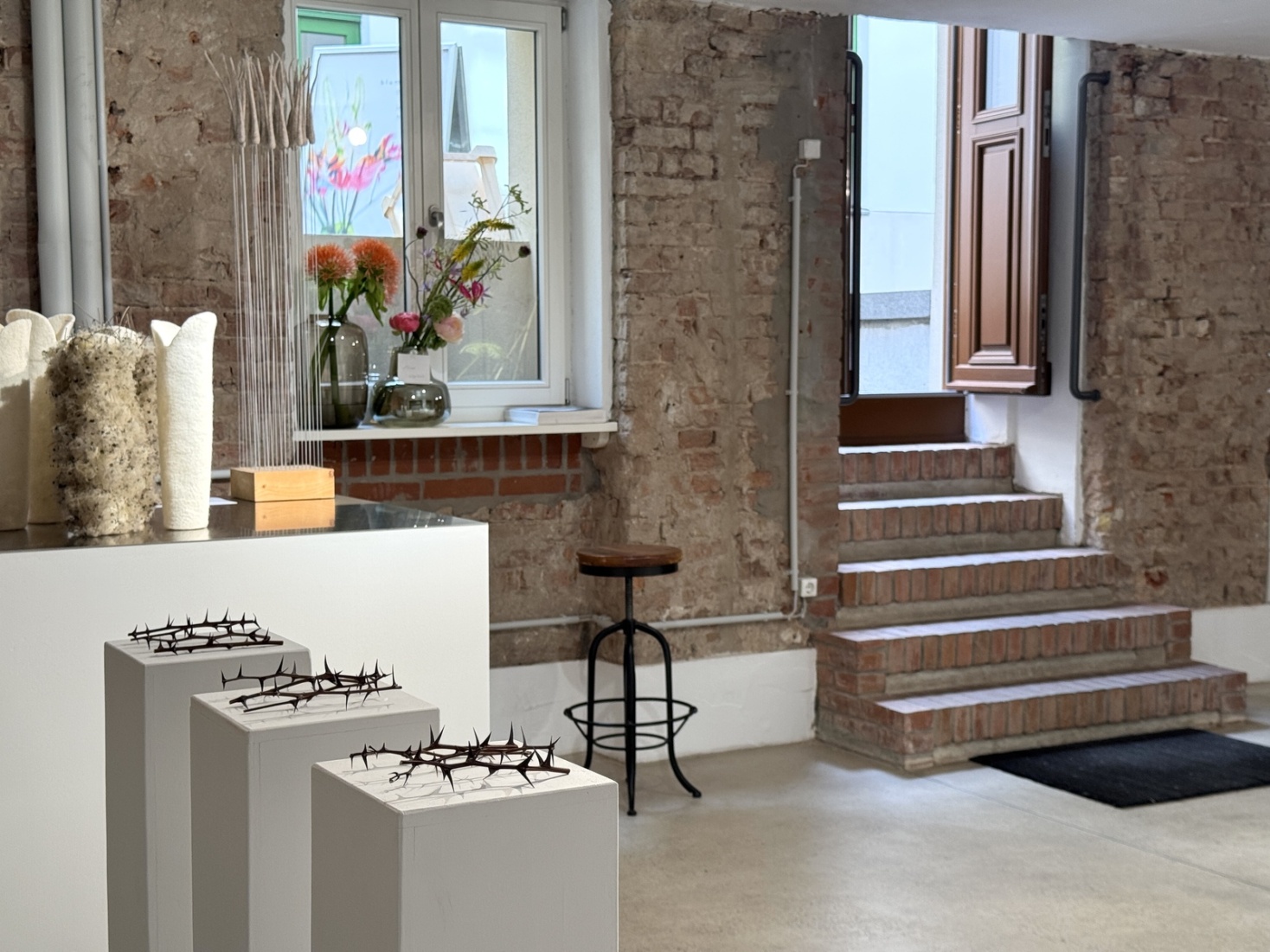
The power of flowers is real
Everything that enters our shop passes through our hands. In the process, we examine each individual flower to discover its unique and unmistakable beauty.
Removing leaves from flower stems most closely recalls ikebana, where things are artificially shaped in order to appear natural. When someone buys 30 or 40 tulips, it doesn’t require much effort.
The best thing we can do is to present the flowers as they are. Leaves often compete with what the stem carries, obscure it, or simply distract. Removing the leaves is like giving the flower a haircut. It directs attention to what matters most without destroying it. The essence—the core—is the blossom. The metaphorical power of flowers is based on a paradox: they seem weak and fragile, yet convey visual, emotional, and spiritual strength.
The structure of the shop
The concept comes first, but it cannot be precisely defined. It is a flower shop—but it can also function without flowers. Behind the concept, one can see the construction of a building.
- The ground floor represents the concept in its complex, indefinable entirety.
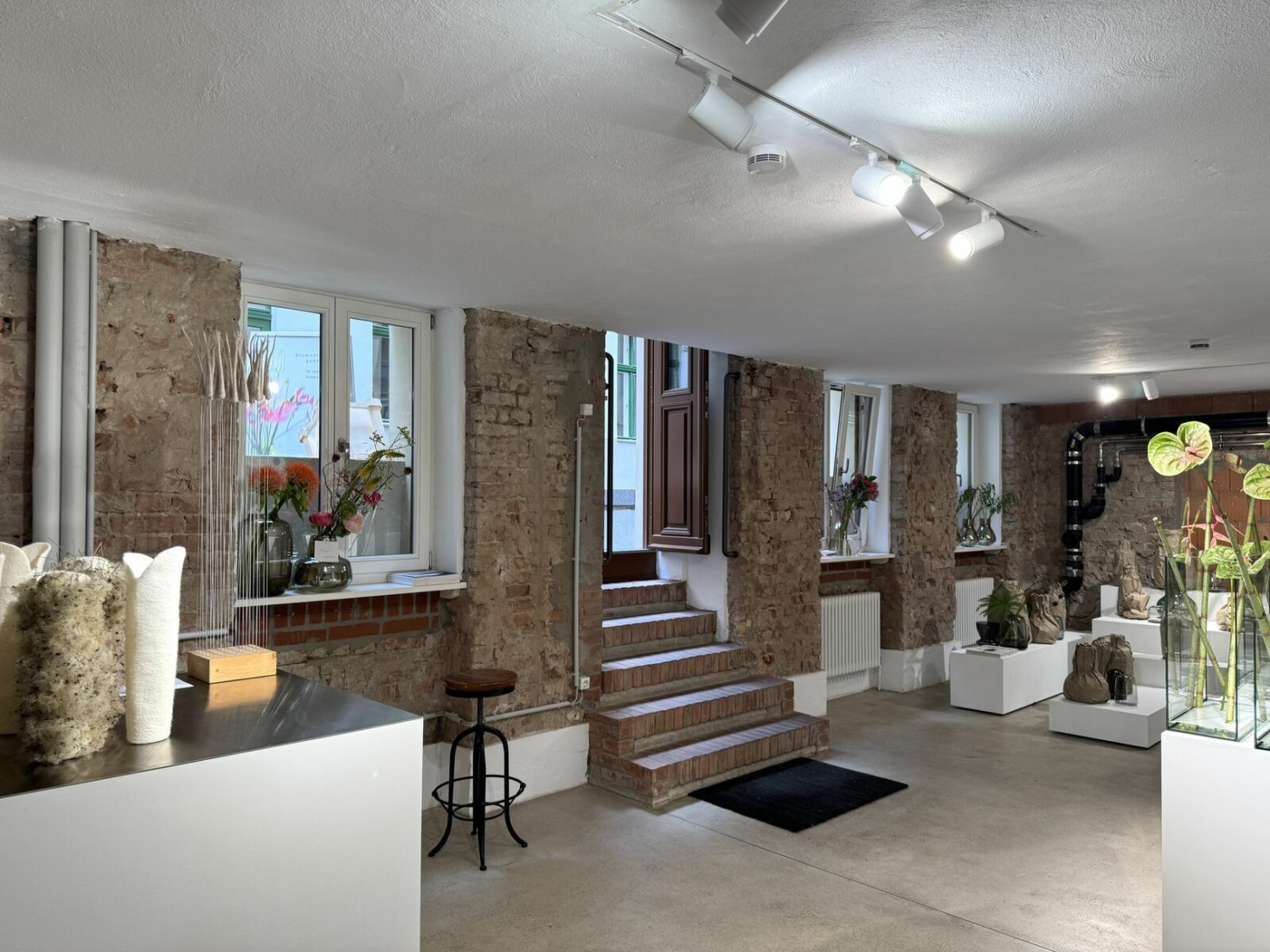
- The first floor is architecture and design. The bare space carries emotional meaning. Beyond the physical, nakedness also has a psychological dimension—it embodies purity and manifests as a kind of liberation, leading to a new sense of freedom and originality.
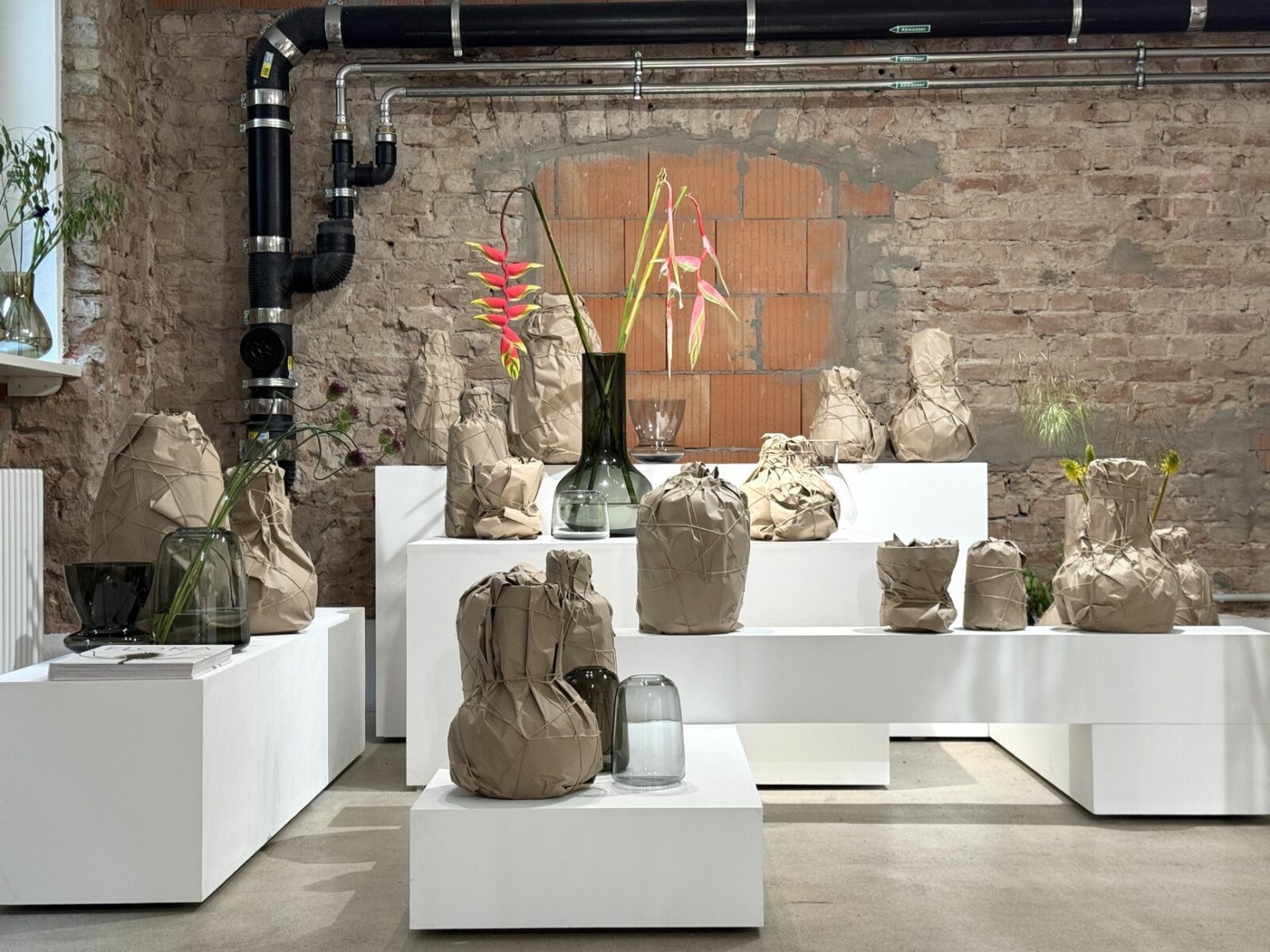
- The second floor consists of the arrangement of the sales furniture.
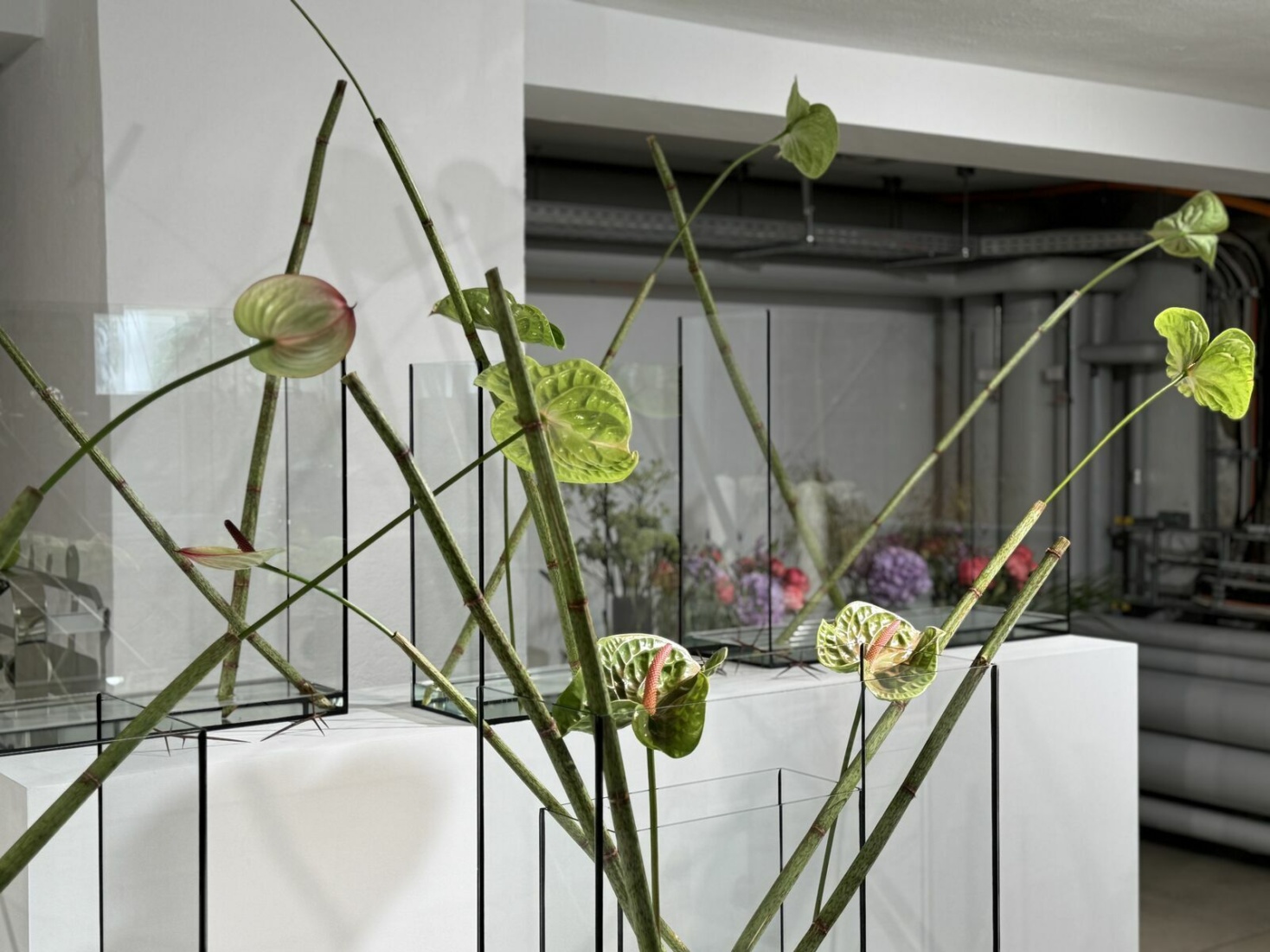
- The third floor is represented by the vases and “Blumariums” inspired by aquariums.
- The fourth floor is the flowers themselves, arranged in these vessels. Artists—and their works—are also invited into this level.
Twice a week, we radically rearrange the placement of furniture, Blumariums, and vases—usually on Sunday/Monday and Thursday—based on a specific theme, often inspired by seasonal music or exhibitions. The aim is to “revitalize the spirit of the place.” At the same time, we enjoy experimenting with new vases and their combinations.
Ten-hour days are the norm (9 am – 7 pm). Twelve-hour days are not uncommon. And in the six weeks leading up to Christmas, 80–90-hour weeks are standard.
Bouquet-making—deeply personal
Sometimes a customer orders a bouquet by phone and later calls back saying the flowers are ugly. We politely explain that there are no ugly flowers: “Flowers are beautiful by nature. What you probably mean is that you don’t like the arrangement.”
We decide which flowers or plants suit a particular person. We base this on what the person seems to need, as well as our impression of their character, body language, and clothing. Then we look around the shop and choose the flower that feels most beautiful in that moment. Just as important is observing the person—their reaction to the flowers and arrangements we show them. We believe customers appreciate the care we take in selecting what suits them best. They are curious about what we will choose and suggest—personally, and only for them.
Sometimes customers ask whether their chosen combination is “impossible.” We always reply: “If you like it, it isn’t.” If someone selects flowers we would never have combined ourselves, there are two possibilities: either we clearly say it doesn’t work, or we try to create something new—a composition we would never have imagined.
Modern arrangements over classical ones
We clearly prefer “modern” arrangements over “classical” ones.
Classical arrangements are typically symmetrical, dense, bushy, or tightly bound. Colors are usually harmonized, and gaps between blossoms are filled with greenery. Modern arrangements, by contrast, appear more natural. They tend to be asymmetrical, graphic, and sometimes deliberately “unproportioned.” Color combinations are much more heterogeneous.
A subtle surrealist shift is often present—a defining quality of many of our modern arrangements. It is based on three main principles:
- Combining flowers that would never occur together in nature—such as poppy, ranunculus, viburnum, orchid, and anthurium in one bouquet.
- Using long, slender, flexible horsetail or cattail stems to hold the composition together—woven around and between stems like a snake, making the base resemble a Picasso-like bird’s nest.
- Removing all or nearly all leaves from the stems.
When we arrange flowers, we change their context. This “context shift” could, in the spirit of Andy Warhol, even be called art.
“La Serenissima” at Berlin Art Week 2025 — September 10–14, 2025
Glass art from Venice will be exhibited, primarily by Massimo Micheluzzi and Micheluzzi Glass. Works by Arcade Murano and Ritsue Mishima are also planned, in collaboration with the Charlottenburg-based gallery “Brutto Gusto,” which specializes in contemporary craft and represents an esteemed group of world-class artists.
Opening hours & location
Tue–Fri: 10 am – 6 pm
Sat: 9 am – 5 pm
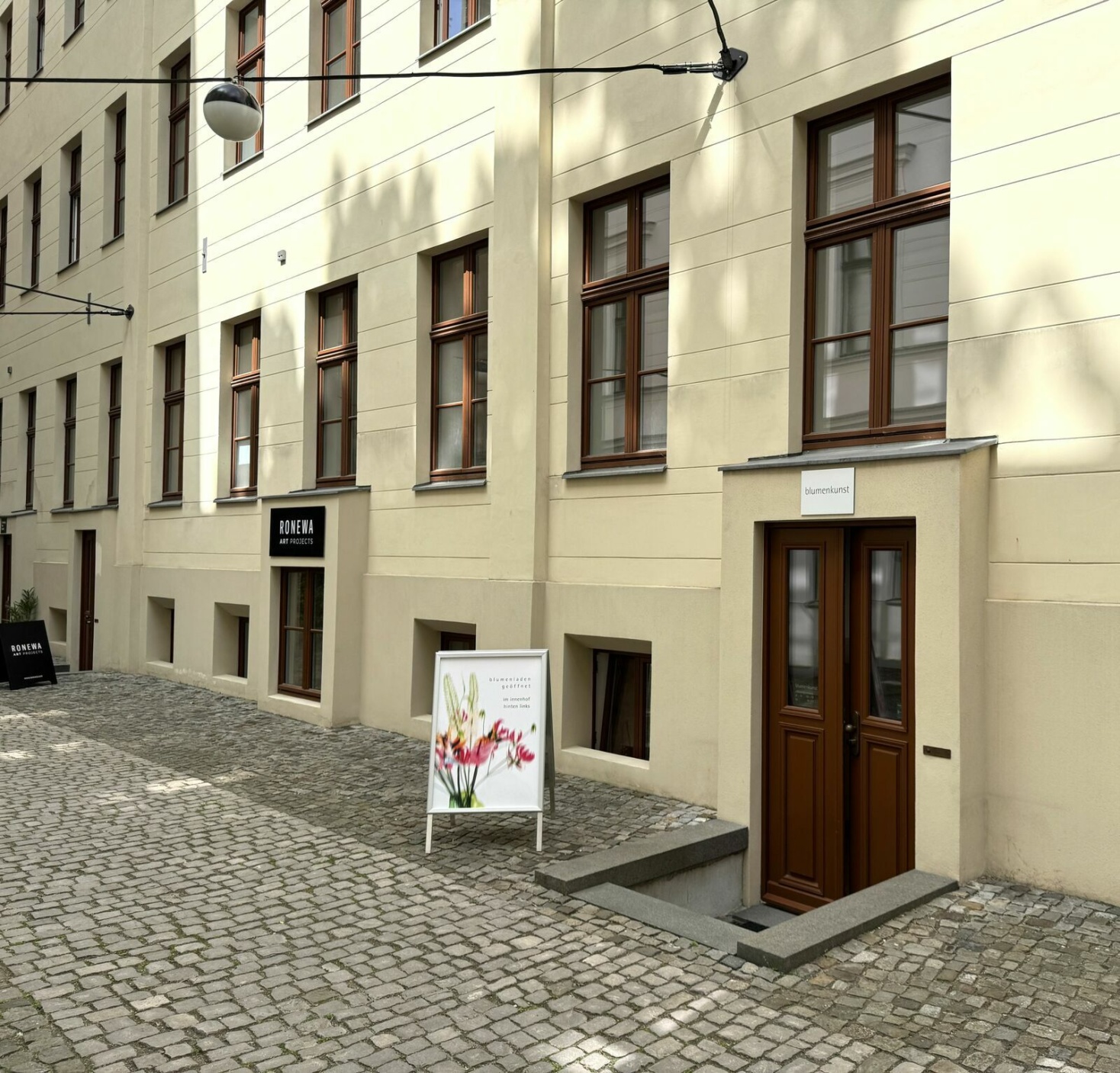
Potsdamer Straße 91, courtyard
10785 Tiergarten Berlin